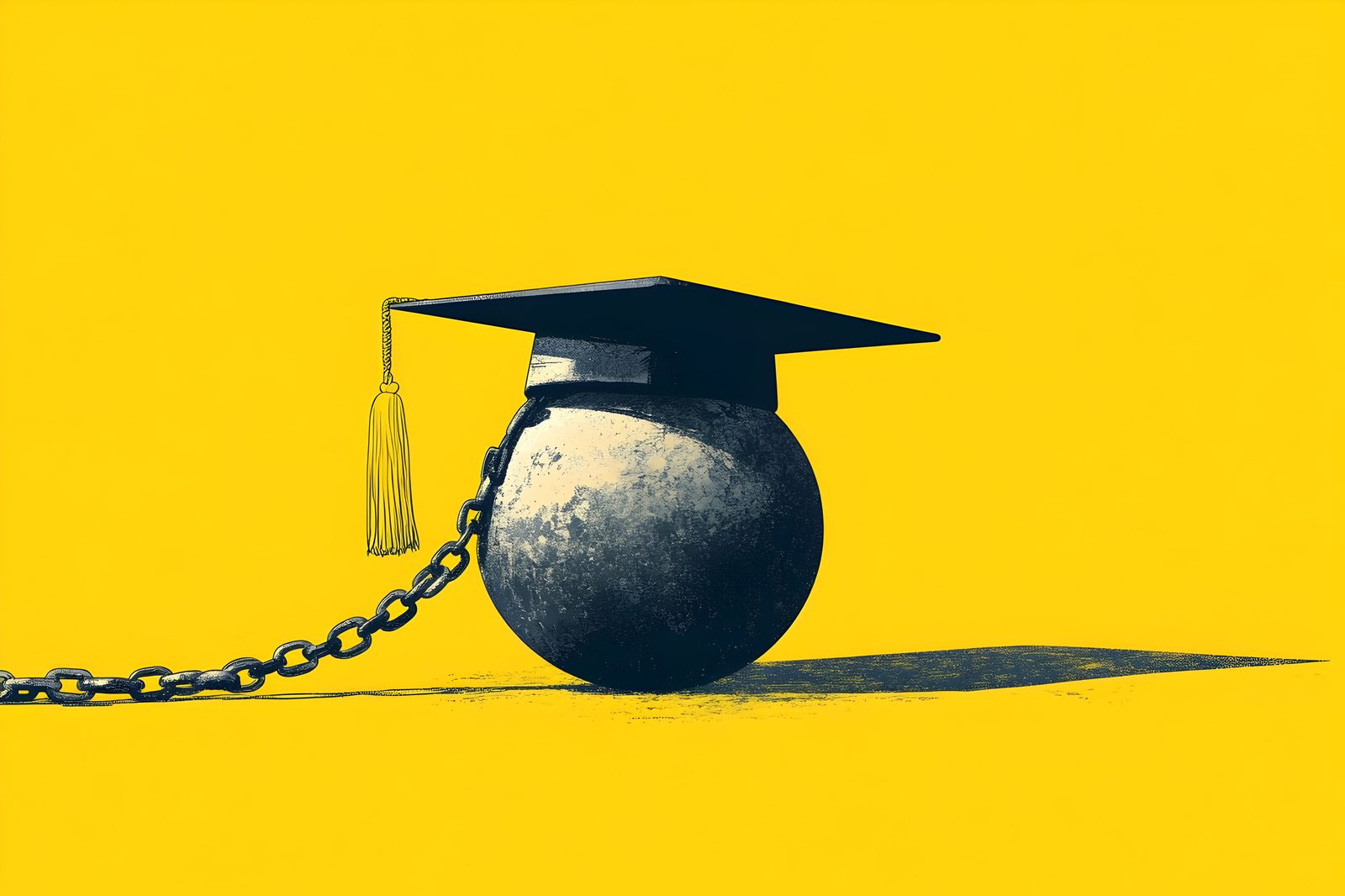
Using Debt Smarter
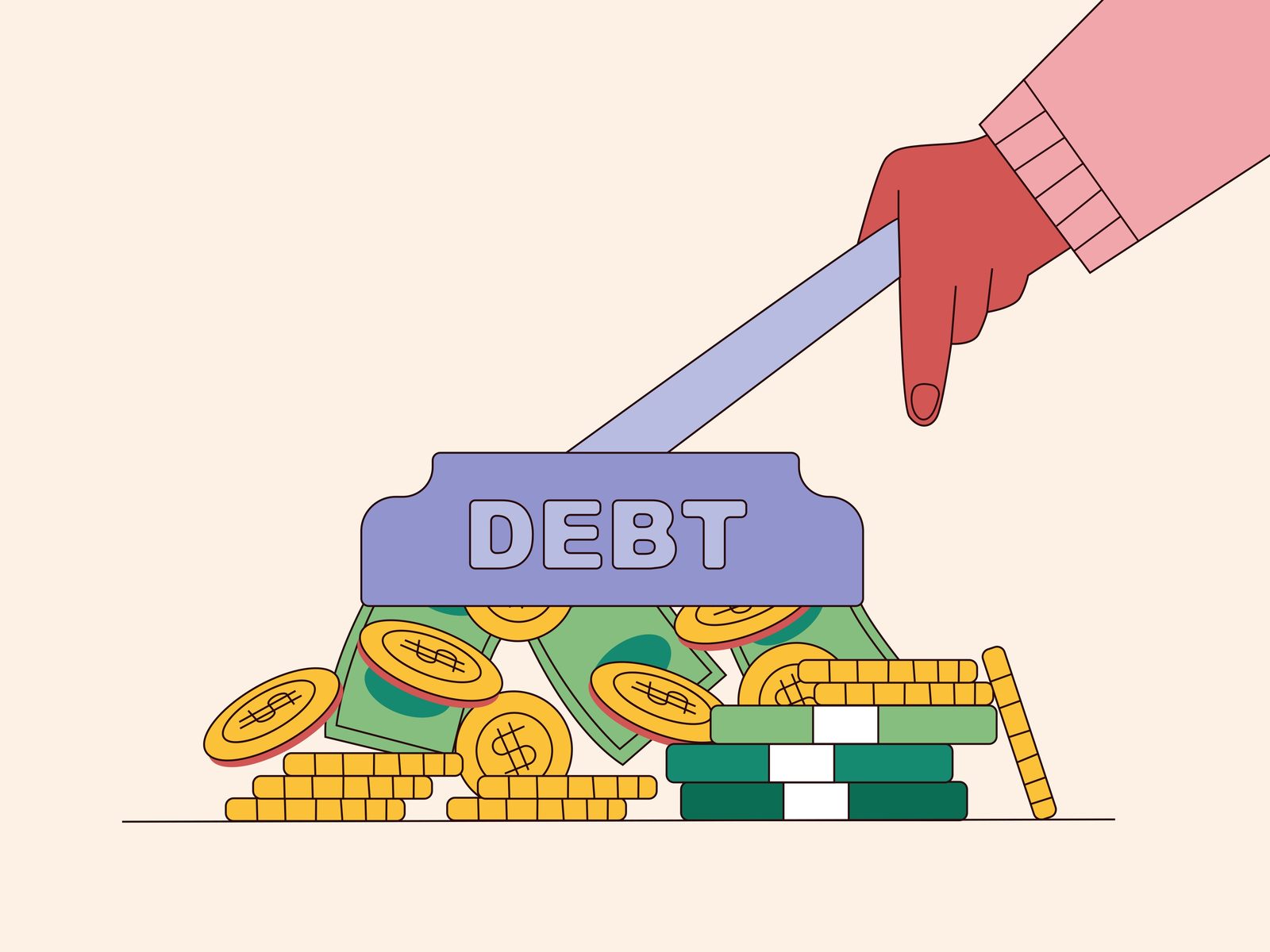
The Family Heirloom Nobody Asked For
Debt fear gets inherited. The three-number check replaces it with math.
Some families hand down a watch. Most hand down a feeling about debt.
The feeling usually says pay everything off as fast as possible, then start living. Our book, Master Your Cash Flow; Let Them Eat Cake and Grow Wealth Too! traces where that feeling comes from, the Depression-era losses our grandparents and great-grandparents carried, and then makes a careful case: debt is a tool, and tools respond to numbers better than to feelings.
So, manage yours like a refinance desk would, with our book’s three-number check. APR (Actual Percentage Rate): what the debt costs. Fees: what it costs to move. Flexibility: what happens if life gets messy. Every balance you carry gets scored on those three, and every offer to replace it gets scored the same way.
The numbers make the case for shopping. Bankrate cites an average of about 10.72 percent for a three-year credit union personal loan, using NCUA (National Credit Union Administration) data from the third quarter of 2025, while the average credit card APR ran about 20.97 percent in the fourth quarter of 2025. Federal credit unions also carry an 18 percent interest rate ceiling, extended into 2027. A move from card territory toward credit union territory can slow the bleed considerably, and we call that a debt upgrade.
Two guardrails travel with it. Keep reserves, because the safest position in a storm is holding both savings and debt, and the most fragile is holding neither. And save the difference, because an upgrade only builds wealth if the freed cash flow gets redirected on purpose. Skip that step and the book’s advice flips: you might as well pay the debt down.
One move this week: list every debt with its balance, APR, minimum, and due date. The list takes ten minutes and it is the entire first step of the upgrade.
Run the three-number check against your real balances at CakeClubapp.com.
Want to keep improving your financial habits? Check out our Financial Education Library.
Ready to start getting clear on your financial goals? Download CakeClub® in the App Store.
The Grapes Of Wrath In Your Head: Where Debt Fear Comes From, And What To Do Instead
My father graduated from eighth grade in bare feet.
He was a boy in the Great Depression. My grandfather lost his bakery in the Midwest, and the family survived on doughnuts fried at dawn in a cauldron on the kitchen stove, cooled on paper on the floor, sugared by the kids, and sold door to door for a few cents each. One day the landlord came to the door and told them to get out, right then. They left the furniture. They left the clothes. My father had to leave his dog. Until the day he died, he told these stories with such raw hurt that you could feel yourself standing in that kitchen.
So, my father decided debt was bad. Cash for everything, used cars only, never a credit card. He held a mortgage exactly once, at less than $40 a month, fell behind, and had to sell the house. He rented for the rest of his life. He came by the lesson honestly, but the lesson was still wrong.
Andre, twenty-seven, a radiology tech I’ll use as our stand-in, carries the same inheritance in a softer form. His grandmother’s rule was “we don’t owe anybody,” and he hears it every time he looks at his $4,800 card balance at 26.99 percent and his car loan signed at a bad moment. The rule tells him to attack the balances with every spare dollar and keep nothing back. The rule feels like wisdom. The chapter in our book, Master Your Cash Flow: Let Them Eat Cake And Build Wealth Too! exists so you run the numbers on it.
What The Dust Bowl Actually Taught
The Grapes of Wrath, the 1930s John Steinbeck novel and iconic Oscar winning film, fixed the Depression’s farm losses in the national memory, and it misled audiences about debt. Most of those farmers carried little or none; a generation off the frontier, many owned their land outright. Then the drought came, and farmers who couldn’t cover small seed debts or property taxes lost everything. The farmers who made it through were often the ones holding more debt alongside more savings, because the reserves bought them time. A bank president told me a matching story from World War II: his family’s rental houses carried no debt, wartime rent limits ran below the upkeep, and with no reserves the family eventually gave the properties away.
The pattern repeated in the late-1980s white-collar recession. Laid-off executives came to me with expensive homes, small or fully paid mortgages, and almost no liquid reserves, because every spare dollar had gone to killing the debt. With no income, some paid the mortgage out of their 401(k)s until the accounts ran dry, then sold the houses at fire-sale prices. The lesson, three eras running: catastrophe correlates with missing reserves. Reserves are what debt, used smarter, lets you keep.
Two Buyers, One Recession
A book example makes it more concrete with two buyers. Each holds $500,000 in investments, and each buys a $500,000 house. Buyer A hates debt, pays cash, and owns the house free and clear with nothing left over. Buyer B puts $100,000 down, takes a $400,000 mortgage, and keeps $400,000 invested. Then a recession hits and both lose their jobs.
Buyer A holds a half-million-dollar house and no cash flow. The bank will turn down his home equity application, since he has no job, no income, and no liquid assets, and banks only give you money when you don’t need them. Having utilities, taxes and upkeep to pay, his remaining option is selling the house fast, in a recession, alongside many others selling fast.
Buyer B holds $400,000 in investments that generates interest and dividends toward her expenses, qualifies for credit for a home equity loan if she wants it, or can take her time if she wants to sell. She has options. Same house, same storm, opposite positions. The person holding both assets and debt has options; the person holding only a paid-off asset has a house he can’t eat.
The $40,000 Question
Here is the chapter’s quietest and most useful math. A client in her late twenties carried $40,000 in loans at about $1,700 a month and owned a home with $100,000 of equity. Her plan was five years of aggressive payoff, then saving. We suggested a home equity loan at an assumed 10 percent rate instead: the $40,000 loan would cost about $333 a month (10% X $40,000= $4,000. $4,000/12 months= $333), freeing $1,367 every month ($1,700- $333= $1,367), or $16,404 (12 X $1,367= $16,404) a year. If put into her 401(k), the tax benefit at an assumed 40 percent combined rate (not hard to reach in most large cities), total annual savings could reach $27,340 (40% X $27,340=$10,936. $27,340-$10,936= $16,404). Saved for thirty years at an assumed 6 percent growth, that approaches $2.3 million, all by “shuffling paper” (just filling out paper forms for loans), without working at your job an hour longer.
The assumptions in the book are stated plainly, but the caveat is too: the strategy only works if you save the difference. Skip that and you might as well pay the debt down instead. The machinery underneath that drives this is compounding and the Tax Savings Savings Effect, lives in the Power of Compounding lesson and the Tax Savings Savings Effect lesson, and the student-loan version of this math, the physician example, is worked in full inside the Wealth Building Formula® lesson.
The Upgrade, Not The Panic
For debt you already carry, the book recommends a debt upgrade, run like a refinance desk. List every debt with balance, APR (Actual Percentage Rate), minimum, and due date. Label each one: bad debt runs high-APR and revolving, cards, payday, many buy-now-pay-later plans; better debt runs lower, longer, fixed, predictable. Choose one upgrade path, a debt consolidation loan, a zero percent balance transfer if your credit supports it, or a restructure with your current lender. Run a break-even check on interest plus fees. Execute one move and automate the payment. The key is what combination saves cash flow every month.
Credit unions earn the first call. They are member-owned, often price loans more favorably, and Bankrate cites an average of about 10.72 percent for a three-year credit union personal loan on NCUA (National Credit Union Administration) data from the third quarter of 2025, against an average card APR of about 20.97 percent in the fourth quarter. Federal credit unions carry an 18 percent ceiling, extended into 2027. Andre’s quote came back well under his card rate; the break-even cleared in the first year, and the payment went on autopilot the same afternoon. We don’t like bleeding cash flow to anybody.
— Application Box —
The Hidden-Fee Checklist (Ask Before You Sign)
Ask for the Truth-in-Lending disclosure, then ask: Is there an origination fee (a fee to get the loan), how much, and is it deducted from the loan? Any prepayment penalty, or can I pay early for free? What is the late fee and grace period? Is the rate fixed or variable? Are any add-ons required or automatic, insurance or memberships? Any payment-method fees? And one red flag ends the conversation: a lender asking for an upfront fee before giving the loan, which the FTC explicitly warns is a common scam.
Back To Andre
Andre still dislikes owing money, and he doesn’t have to like it. He has a list, three numbers per line, one upgrade executed, reserves rebuilding, and the freed difference flowing somewhere on purpose. My father never got the chance to learn this. The doughnuts, the bare feet, the dog: those were real, and the conclusion drawn from them affected how my family made debt decisions for another generation. Run the numbers your grandparents or parents never learned to run. That is the whole assignment.
Want to keep improving your financial habits? Check out our Financial Education Library.
Ready to start getting clear on your financial goals? Download CakeClub® in the App Store.
Related Resources